
Healthcare workers dedicate their careers to caring for others, but who is taking care of them?
Long shifts, physically demanding work, staff shortages and rising patient needs contribute to healthcare worker burnout, workplace injuries, and declining employee well-being.
While people often discuss healthcare burnout from a mental health perspective, the physical toll of caregiving is equally important. Fatigue and repetitive strain have made healthcare one of the most challenging professions today.
Ergonomic considerations are emerging as powerful ways for creating healthier, more sustainable work environments.
What are the ongoing challenges healthcare workers face, and what strategies can leaders adopt to create vibrant, resilient workplaces where caregivers thrive?
The Growing Physical Demand of Healthcare
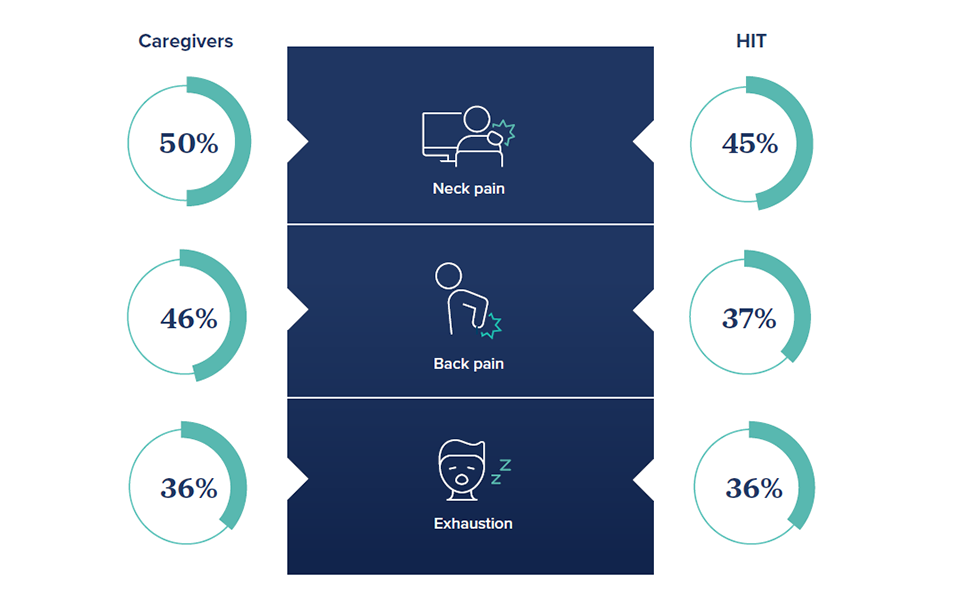
Among surveyed healthcare workers in a proprietary study, the most significantly reported pain points include:
Healthcare professionals spend long hours performing tasks that place stress on the body:
- Moving equipment between patient rooms
- Standing for long periods
- Reaching & bending throughout patient interactions
- Repetitive computer work & documentation
Repetitive motion, awkward posture, and extended periods of standing or sitting can lead to workplace injuries.
Insights for Healthcare Leaders
Ergonomics plays a key role in reducing physical strain and supporting employees throughout demanding shifts, and healthcare professionals agree:
- 92% believe caregivers should have more of a voice when it comes to selecting ergonomic equipment and new technology at their organization
- 95% of healthcare workers surveyed said better ergonomics and mobile equipment would improve their health and well-being
When caregivers can maintain proper posture, reduce repetitive strain, and move more naturally throughout their day, not only are they able to preserve their own health and well-being, bu
Ergonomics in Action
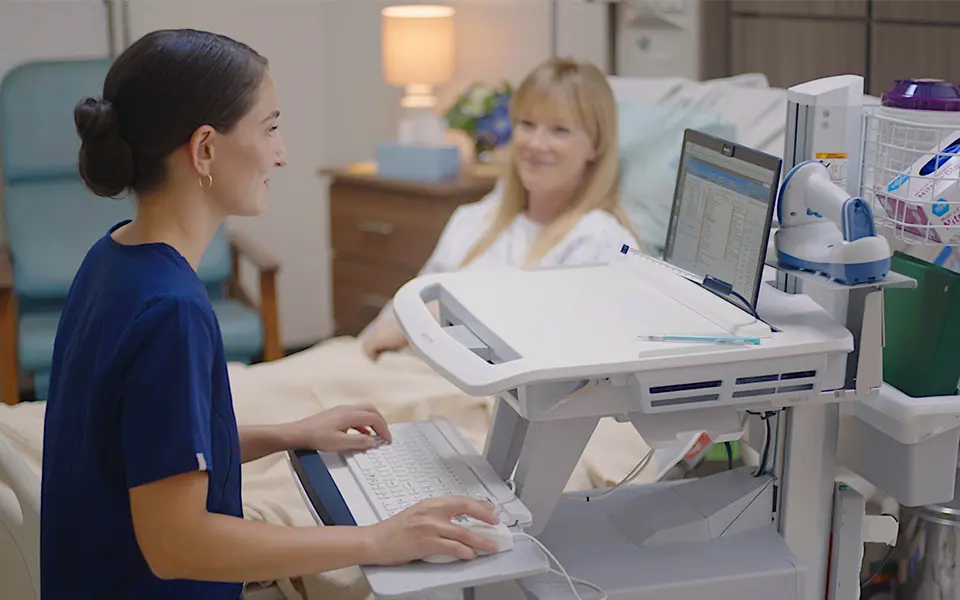
Ergotron’s ergonomic solutions include:
- Height-adjustable workstations
- Mobile medical carts
- Sit-to-stand workstations
- Adjustable monitor arms

“Healthcare’s future depends on the people delivering quality care. The daily experiences of caregivers and Healthcare IT professionals can be transformed by designing work environments that support physical health and dramatically improved workflows. Thoughtful and targeted investments in workflow solutions don’t just improve working environments; they help caregivers and IT professionals focus on delivering care – driving performance and retention.”
Scott Gill, CEO, Ergotron
At its core, ergonomics recognizes that work should adapt to people—not the other way around. They create workplaces where caregivers are empowered to work at their best.

Learn more about supporting the well-being of healthcare professionals.