
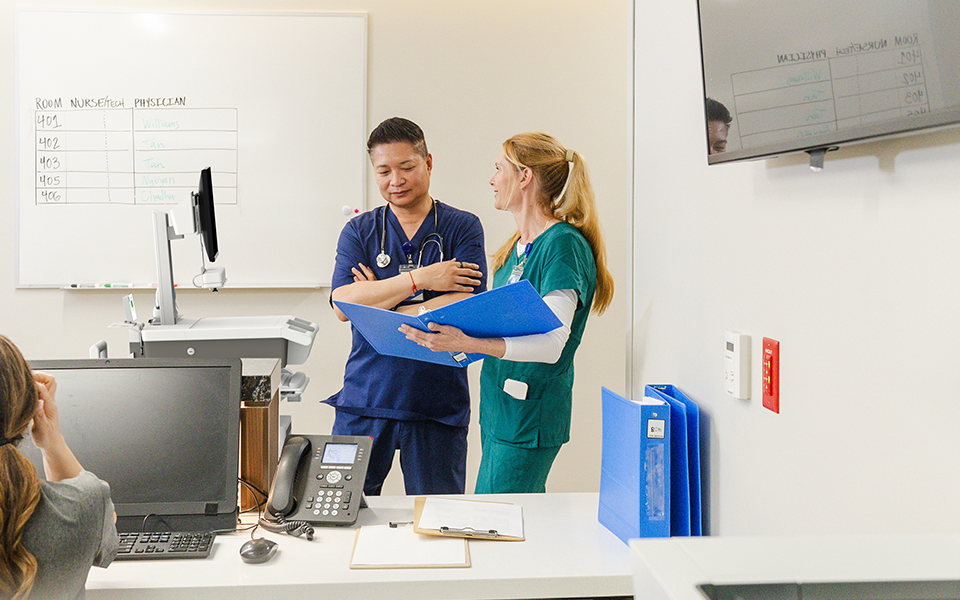
Editorial by Sam Low, Clinical Nurse Consultant at Ergotron
I recently attended a HIMSS-MN panel of local healthcare and informatics leaders to discuss hybrid care models and the future of care delivery. The conversation highlighted how rapidly technology is evolving and how that evolution is reshaping the way healthcare is delivered. One of the biggest takeaways was the challenge of designing clinical environments around a future that is constantly changing. With new technologies and expectations around care, creating spaces that can adapt over time is becoming increasingly important. It’s a challenge that raises an important question: How do we design healthcare environments today that are prepared for the needs of tomorrow?
Virtual nursing, TeleICU, tele consults, ambient documentation, mobile technology, and AI are already changing how and where care is delivered. The panel talked about cameras, microphones and displays becoming a bigger part of the patient room, while phones and tablets may take on more of the work we traditionally think of happening at a computer.
But what does that look like three or five years from now? We don’t really know.
The discussion around balancing standardization with flexibility was especially interesting. Health systems need to standardize in order to scale, while also recognizing that the technology and the workflows around it are going to continue to change. It made me think about Mosaic and the value of modularity in the clinical environment. A workstation that supports today’s workflow may need to support something very different in a few years. The monitor may change. A camera or microphone may need to be added. The primary computing device may change completely. And the workflow around all of it will likely evolve too.
If we know change is coming, we should be planning for it from the beginning. That’s where I see the value of a modular approach. Instead of designing a clinical workspace around one device or one workflow at one point in time, we can create a foundation that has the ability to change along with the technology and the people using it.
We may not know exactly what the clinical workstation of the future looks like yet but maybe we don’t need to. How do we design clinical environments today that give healthcare teams the flexibility to adapt to whatever comes next?

Sam Low is Ergotron’s Clinical Nurse Consultant, bringing more than 14 years of clinical experience and a deep understanding of the challenges healthcare professionals face every day. She combines her nursing background with a passion for improving the caregiver experience, helping inform solutions that support healthcare workers, enhance workflows, and create better care environments.